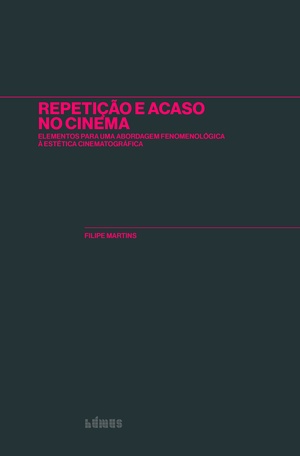
Book launch with the author in attendance
Free admission
In Repetition and Chance in Cinema, Filipe Martins proposes a reading of film aesthetics grounded in the tension between authorial intentionality and realism. Phenomenology provides the tools to understand cinema not merely as a technique, but as a poetic process that relies on the mediation between the order orchestrated by the author and an openness to the orphanhood of the real world.
The central focus rests on two key concepts: persistence and contingency. While persistence manifests as a construct that presupposes an author's intention, contingency, conversely, entails a "return to the real" and the concealment of the traces of authorship. Both tendencies coexist within the various forms of cinematic creation, manifesting through a diverse range of figures analyzed in this book. On one side are the figures rooted in repetition: rhythms, refrains, leitmotifs, styles, consistencies, diligences, narrative arcs, continuity, structuring. On the other side are the figures rooted in the orphanhood of the real and the admission of chance: ambiguity, randomness, impartiality, decontextualization, disorganization, autonomization, neutrality, sincerity.
Both the figures of persistence and those of contingency participate in the production of the aesthetic effect, complementing one another. Indeed, persistence and contingency are not necessarily in opposition; rather, each of these movements possesses its own antinomic correlate within the artistic context: persistence is threatened by arbitrariness, while contingency is threatened by artificiality. In these terms, the aesthetic operativity of the cinematic work will depend on an essential balance: steering clear of arbitrariness (that is, avoiding a deficit of persistence) without succumbing to artificialness (or to the excessive visibility of authorial intention).