Special Session
Treyf
1998 | United States | 56 min | Alisa Lebow, Cynthia Madansky
15:OCT 17h00—17h56
Batalha Centro de Cinema
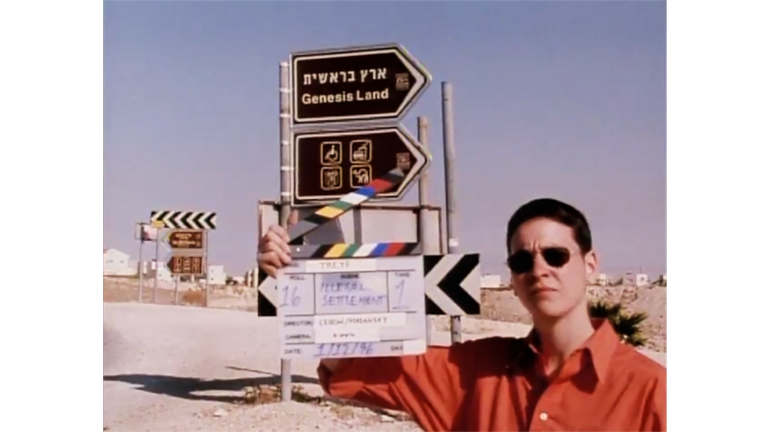
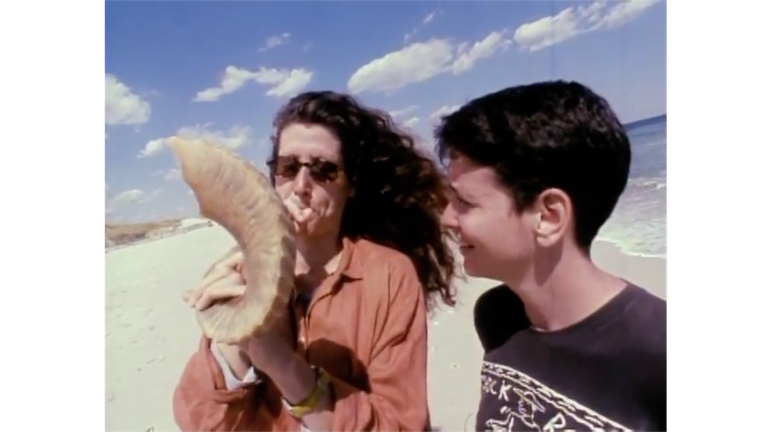
Treyf — “unkosher” in Yiddish — is an unorthodox documentary by and about two Jewish lesbians who met and fell in love at a Passover Seder. With personal narration, real and imagined educational film strips, and haunting imagery, filmmakers Alisa Lebow and Cynthia Madansky examine the Jewish identity of their upbringings and the ways Zionism was seamlessly enfolded into it. Incisive cultural critics, astute, poignant, and poetic — never cynical — they weave their way from New York to Jerusalem and back, in search of a progressive, secular Jewish identity that draws from their childhood reminiscences as much as from their contemporary queer lives. A reflection on culture, community, and individual desire, this witty film follows the filmmakers as they discover what they thought was most profoundly treyf about their worldviews still has roots in Jewish history.
+
Masterclass
Speaking Across Time: A First Person Account
15:OCT 18h15—19h00 45'
Batalha Centro de Cinema
First person films inevitably age alongside the filmmaker, becoming an archive not only of a moment in time, but of a moment in life. While this is to be expected, the archive effect can become much more than a trace of a former time, but may in fact, at least in some cases, serve as a pre-history and a foreshadowing of a time to come. This seems to be, in fact, what happened with my first person film, made in 1998, which has begun to recirculate with keen interest more than 25 years later. The film in question, Treyf (dir. Alisa Lebow and Cynthia Madansky) was an effort to articulate a queer, secular, non-zionist Jewish positionality at a time before an organised community of like-minded progressive Jews had emerged. Now, suddenly, since the genocide in Gaza began, there is a call for community screenings of this film that, a quarter of a century later, provides evidence of prior thinking and experiences to draw from as young progressive, anti-zionist jews (and non-jews) are finding their voice. The recent revival of this quirky first person film suggests unexpected dialogues across time that could never have been anticipated, and provides an opportunity to reflect on the archive-effect of this particular first person film.
Masterclass Registration