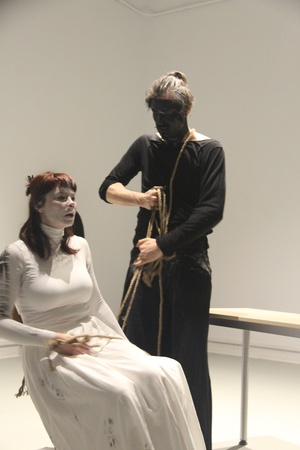
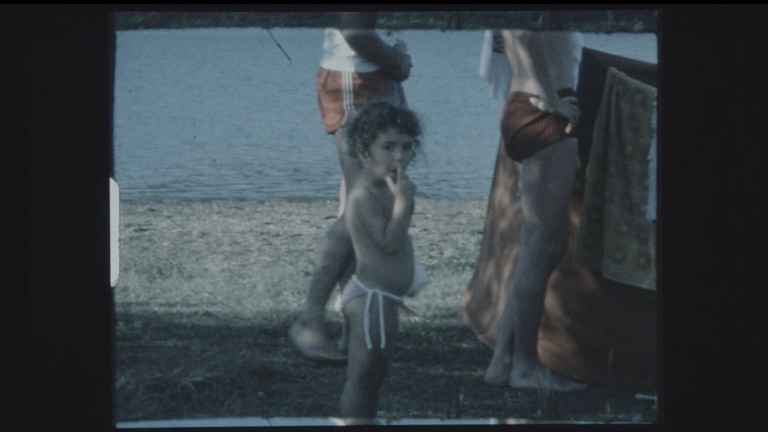
Control rarely has a face. Far more often, it remains invisible. It does not stand before a person - it stands behind them. It does not issue commands but patiently teaches repetition. Over time, we cease to distinguish our own will from the movements that have been passed on to us. A gesture performed for the hundredth time begins to seem natural, even though its origin has long been forgotten. Who is the one pulling the strings? Is it always another person? A parent, a teacher, a partner, the state, religion, culture? Or perhaps memory becomes the greatest puppeteer? Fear? Our own experiences? The words we heard as children and which still stir our bodies to this day, even though the voice that spoke them fell silent long ago. The most unsettling form of control begins when it no longer needs a controller. When a human takes on that role themselves. They correct their own thoughts, restrain their gestures, censor their desires and guard boundaries that no one sets any more. The shadow becomes an inner voice. An invisible hand guiding their movements. This is where the aporia arises. Do I make this gesture because I have chosen to, or because I am unable to make any other? Are my decisions an expression of freedom, or merely a perfectly learnt choreography? Shadow of Control does not attempt to sever these invisible threads. That would be too simple. The project is an attempt to perceive them. To realise that they exist. Only then does it become possible to encounter another human not as a puppet or a puppeteer, but as someone who also carries their own shadow. Perhaps true freedom does not lie in severing all ties. Perhaps it begins the moment we recognise which threads lead to life, and which rob us of the chance to be ourselves. Then control ceases to be an invisible force, and becomes a question worth pondering.